Top 10 Electronic Components Every Engineering Student Should Know About
Whether you’re just starting out in electronics or pursuing an engineering degree, understanding the basic electronic components is essential. These tiny parts are the backbone of every circuit — and knowing how they work can give your projects a solid foundation.
In this blog, we’ll explore the top 10 must-know electronic components that every student and electronics enthusiast should be familiar with.
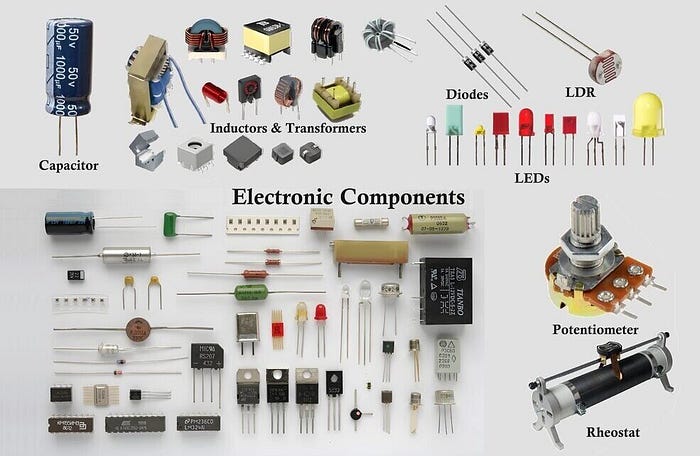
1. Resistors
Resistors limit the current flow and divide voltages in a circuit. They’re color-coded and come in various values, typically measured in ohms (Ω).
2. Capacitors
Capacitors store and release electrical energy. They’re used in filtering, timing, and energy storage applications.
3. Diodes
Diodes allow current to flow in one direction only. The most common type is the LED (Light Emitting Diode), used for indication.
4. Transistors
These are the building blocks of modern electronics. They act as switches or amplifiers in circuits.
5. Inductors
Inductors store energy in a magnetic field. They’re commonly found in power supplies and RF applications.
6. Integrated Circuits (ICs)
ICs are mini-circuits in a chip, and they can include thousands of transistors. Microcontrollers like ATmega328 and ICs like 555 timers are popular among students.
7. Switches
Switches control the on/off operation of a circuit manually. Push buttons, toggle switches, and DIP switches are all useful in DIY projects.
A variable resistor used to adjust levels like volume, brightness, or signal strength.
These components help in generating precise frequencies — often used in microcontroller clocks.
Essential for making connections between different modules or PCBs — including jumper wires, pin headers, and terminal blocks.
Where Can You Buy These Components?
If you’re looking for original and reliable electronic components, check out Computronics Lab — one of the trusted online platforms for embedded systems, robotics kits, microcontrollers, and more. Whether you’re working on a college project or a hobby build, they have everything you need to get started.
Conclusion
Mastering these basic components is the first step toward building smart electronics projects. Keep learning, experimenting, and most importantly — keep building!
For all your component needs, don’t forget to visit 👉 Computronics Lab.
.png)


Comments
Post a Comment